One-Pot Dinners: Maximum Flavour, Minimum Washing Up
How to make stews, curries, rice dishes and pasta bakes taste rich, layered and genuinely worth repeating
If your biggest barrier to cooking isn’t the chopping or the cost but the sight of a sink full of greasy pans, one-pot dinners are the obvious fix. The problem is that too many of them taste like a compromise: soft vegetables, muddy sauces and starches that all blur into one. That is exactly where a bit of method matters more than another recipe bookmark.
A good one-pot dinner isn’t just “everything thrown in together”. It is staged cooking inside one vessel, with each ingredient added at the moment it can do its best work. That is why the best cooks lean on curries, braises, risottos and orzo bakes when they want comfort without chaos. If you want relief rather than nightly decision fatigue, tools like Eatpace can help you line up a week of dinners that actually fit your time and energy, but the flavour still comes down to what happens in the pot.
The real secret to one-pot dinners is sequencing, not simplicity
The biggest myth about one-pot cooking is that fewer pans means less technique. In reality, the opposite is true. Because everything happens in one place, the order becomes ruthless. Brown your meat badly, and the whole dish tastes flat. Add spinach too early, and it disappears into swamp. Put garlic in with onions at the start of a 12-minute sauté, and it turns bitter before the liquid even goes in.
Think of the pot in layers. First comes fat and heat: enough oil to carry flavour, and a pan hot enough to colour rather than steam. Then your foundation ingredients go in. For a curry, that might be onions cooked until the edges catch, then spices bloomed in fat for 30 seconds, then tomato or coconut milk. For a rice dish, it might be sausage or chicken browned hard first, removed, and stirred back later so the rice can absorb stock without the protein overcooking.
This is why one-pot pasta works when treated like risotto and fails when treated like a shortcut. You need concentrated flavour before the liquid goes in. Chorizo Red Pepper Orzo, ready in 28 minutes, works because spicy fat from the chorizo seasons the whole pot before the orzo starts absorbing anything. The same logic makes Truffle Mushroom Orzo Risotto, ready in 42 minutes, feel luxurious rather than worthy: mushrooms need proper contact with the pan before stock enters the scene.
A second sequencing rule: hold back your fresh ingredients. Herbs, lemon, yoghurt, spring onions, soft greens and grated cheese should usually arrive in the final minutes or at the table. One-pot dishes need contrast more than they need extra ingredients. A rich lentil curry without a spoonful of yoghurt and chopped coriander tastes heavy. A creamy orzo without black pepper and lemon zest tastes sleepy.
If you want more ideas in this vein, the one-pot recipes collection is the right place to start, especially when you need dinners that feel generous rather than austere.
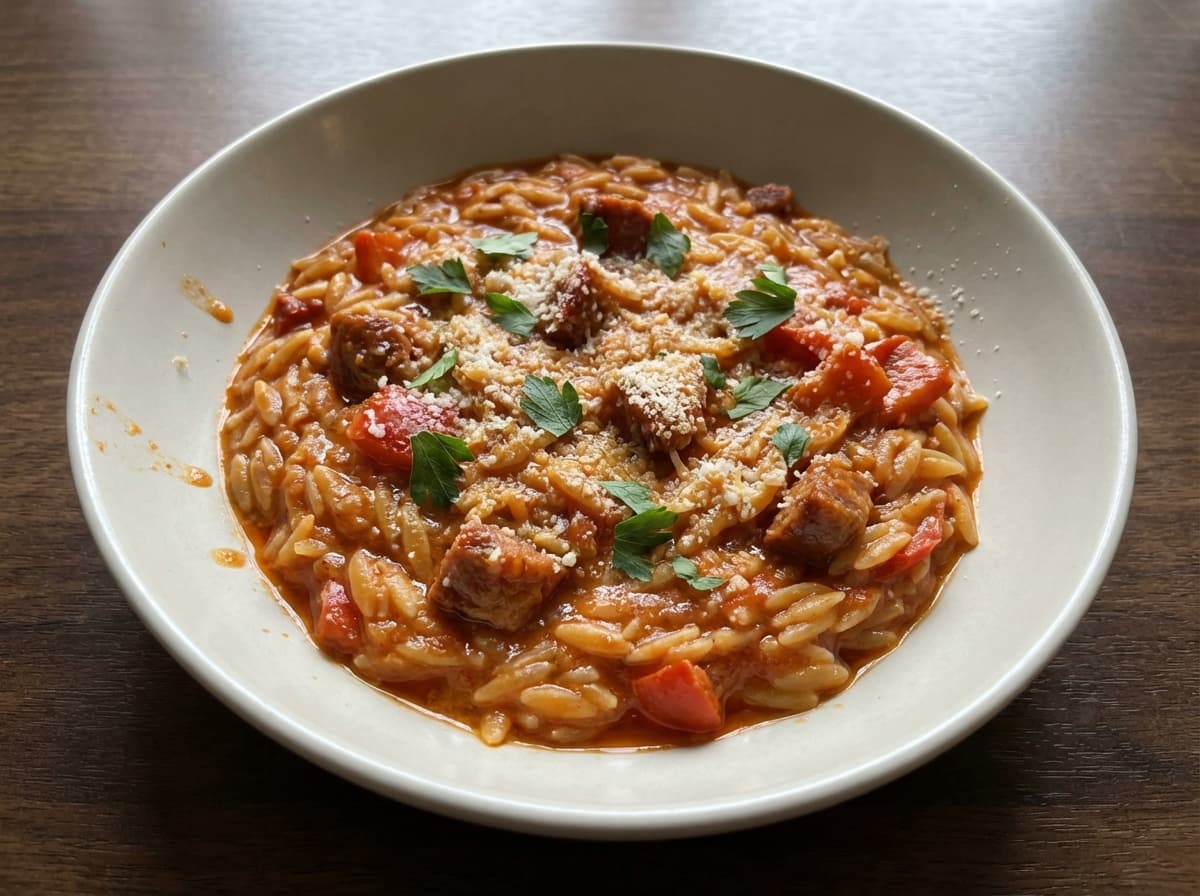
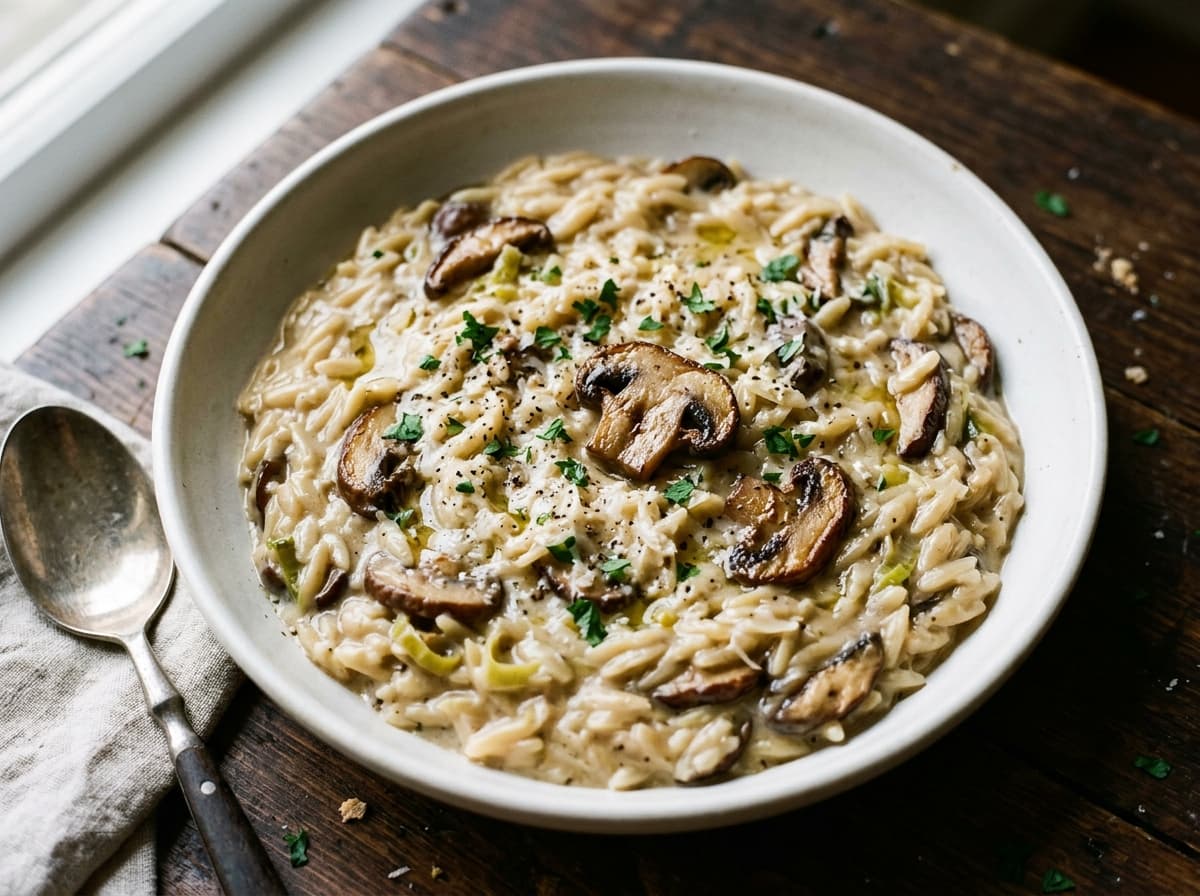
These two recipes prove that one-pot comfort does not have to mean long, slow cooking. One gives you smoky, paprika-rich depth in 28 minutes; the other builds savoury richness in 42 minutes with mushrooms and starch doing the heavy lifting.
Why the best one-pot meals lean into starch — and how to stop them turning stodgy
People often blame one-pot dinners for being heavy, but the real issue is poorly managed starch. Rice, pasta, lentils, potatoes and orzo are what make a single pot feel like a complete dinner. They absorb stock, collect seasoning and give the dish body. The problem starts when they are treated as filler rather than as the engine of flavour.
The fix is precise liquid control. In a one-pot dish, you are not just cooking starch; you are designing the final texture. Too much stock and you get soup. Too little and the base catches before the grains soften. A practical rule: add enough liquid to cook, but not so much that you cannot imagine it reducing into sauce. If the pot looks watery halfway through, that is fine. If it still looks watery in the final five minutes, take the lid off and turn the heat up.
Rice dishes are the easiest place to see this go right. Coconut Prawn Curry & Rice, ready in 30 minutes, works because the rice cooks in seasoned liquid and picks up coconut richness as it goes. Chicken Korma Curry & Rice, ready in 42 minutes, lands in the same comfort zone but with a gentler, creamier profile that suits households where one person says they do not like spice when what they really mean is they do not like heat.
Lentil-based pots deserve more respect too. Palak Dal Curry, ready in 42 minutes, is a model weeknight meal because the lentils thicken the sauce naturally while the spinach stops it feeling beige or one-note. That balance matters. A one-pot dinner should have one creamy element, one soft element and one bright element. Without that third note, everything tastes blurred.
There is also a strong case for choosing dishes that get even better after ten minutes off the heat. Resting is not restaurant fussiness; it is structural. Rice settles, sauces tighten, and starches stop tasting raw or aggressive. If you serve straight from a bubbling pot, you are often eating the dish before it has finished becoming itself.
For colder evenings, this is exactly why comfort recipes outperform flimsy “healthy bowls”. You want food that relaxes in the pot and deepens, not food that has to be rushed from hob to plate.
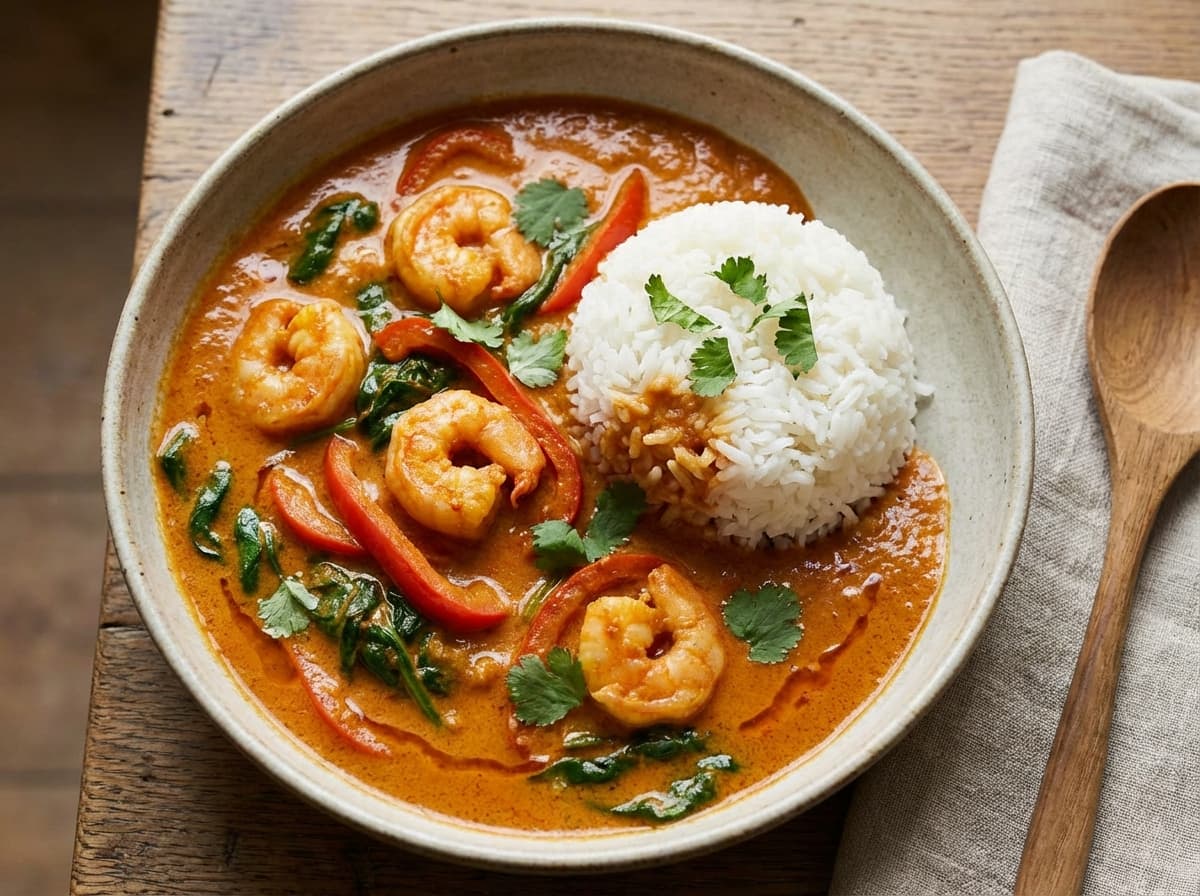
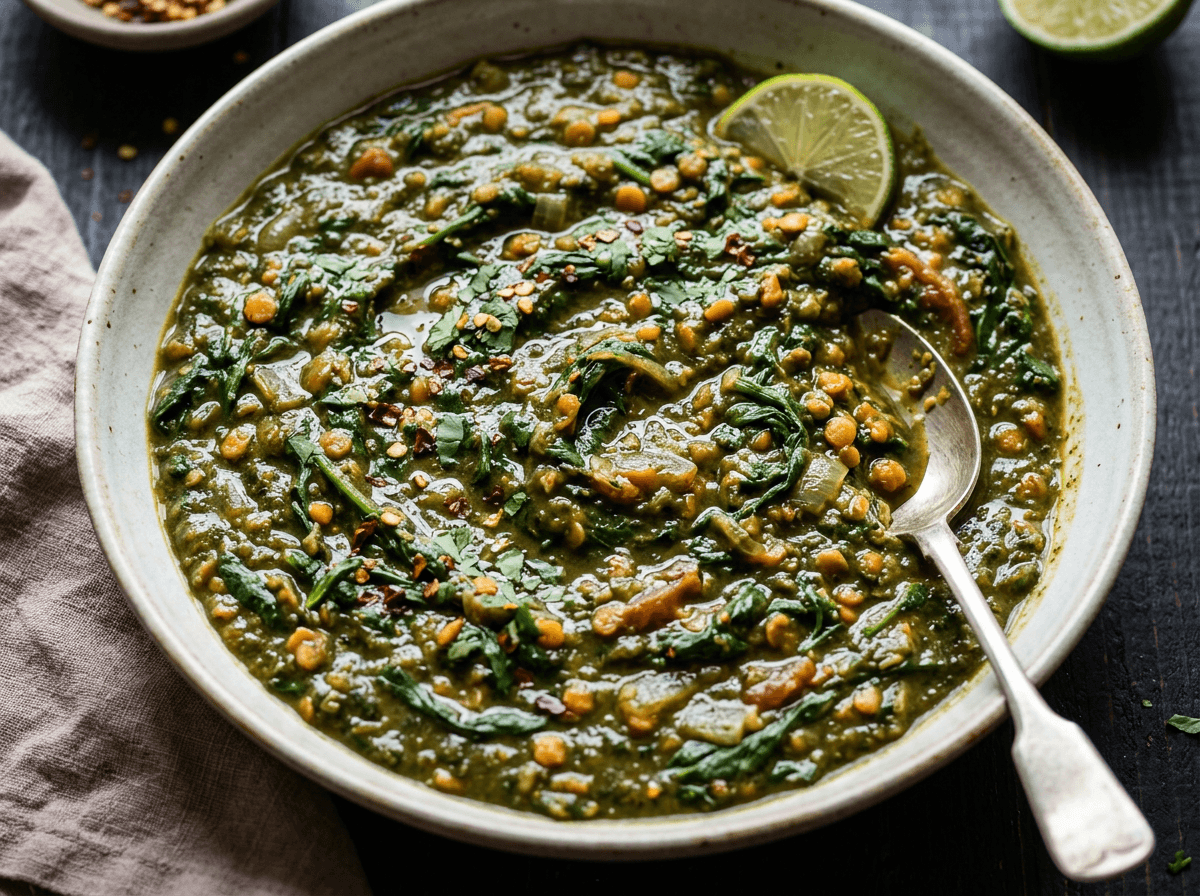
These are ideal examples of one-pot dinners that use starch intelligently. One is fast and rich enough for a Tuesday; the other is economical, freezer-friendly in spirit and deeply satisfying without any meat at all.
One-pot dinners for weeknights need contrast, not endless ingredients
A lot of bad one-pot cooking comes from overloading the pan. You do not need twelve vegetables, three dried herbs and two proteins to make dinner feel complete. You need contrast that survives cooking. In practical terms, that means choosing one deep savoury base, one ingredient that keeps its shape, and one finishing element that cuts through richness.
Take curries. The reason some taste restaurant-level and others taste like vaguely spiced cream is that the best versions understand contrast. Aloo Gobi Curry, ready in 42 minutes, works because cauliflower and potatoes behave differently in the pot: one softens and absorbs, the other holds a little bite if you do not overcook it. Saag Paneer Curry, ready in 40 minutes, succeeds for the opposite reason. The spinach collapses into sauce, but the paneer remains distinct, giving you texture in every forkful.
This is also why acid matters more in one-pot dinners than most home cooks realise. A squeeze of lime in a coconut curry, a spoon of yoghurt on a dal, a little vinegar in a tomato-based braise, or even just chopped pickled chillies over a creamy rice dish can wake up the whole pan. Richness without acidity is just heaviness wearing a nicer coat.
Another overlooked trick is to treat garnishes as part of the recipe rather than decoration. Toasted seeds, crispy onions, chopped herbs, crushed peanuts or a spoonful of chilli crisp can rescue a soft-textured dish from monotony. This matters even more if you are cooking big-batch one-pot meals for leftovers. Day-two dinners need texture because reheating smooths everything out.
If you are choosing recipes for a busy week, this is where a planner earns its keep. Eatpace is useful because you can calibrate your tastes quickly, generate a week, and swap anything that feels too heavy or too similar before you end up eating three creamy dinners in a row. That sounds small, but avoiding texture fatigue is half the battle with meal planning.
You can also borrow ideas from categories beyond strict one-pot cooking. Easy dinner recipes and healthy recipes often contain the kind of bright finishes and lighter sides that make a richer pot feel balanced rather than relentless.
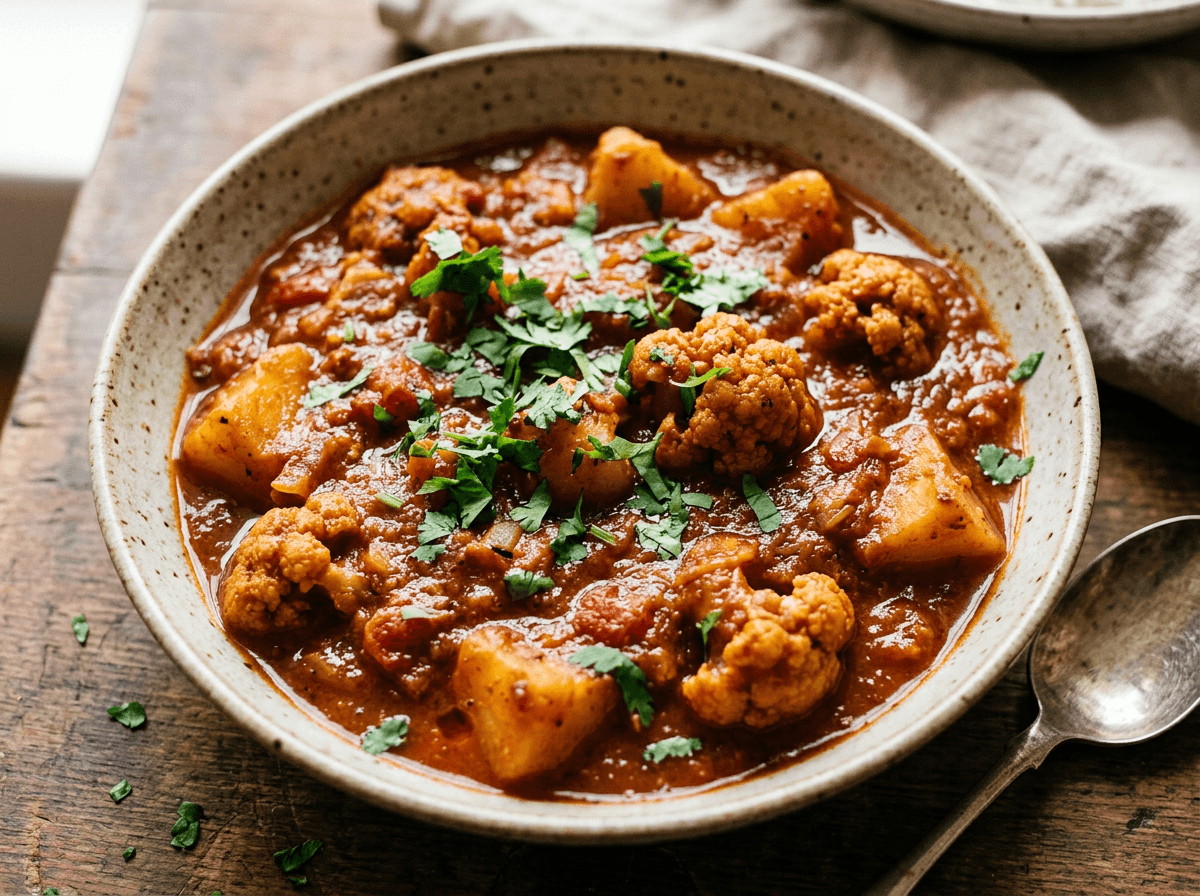
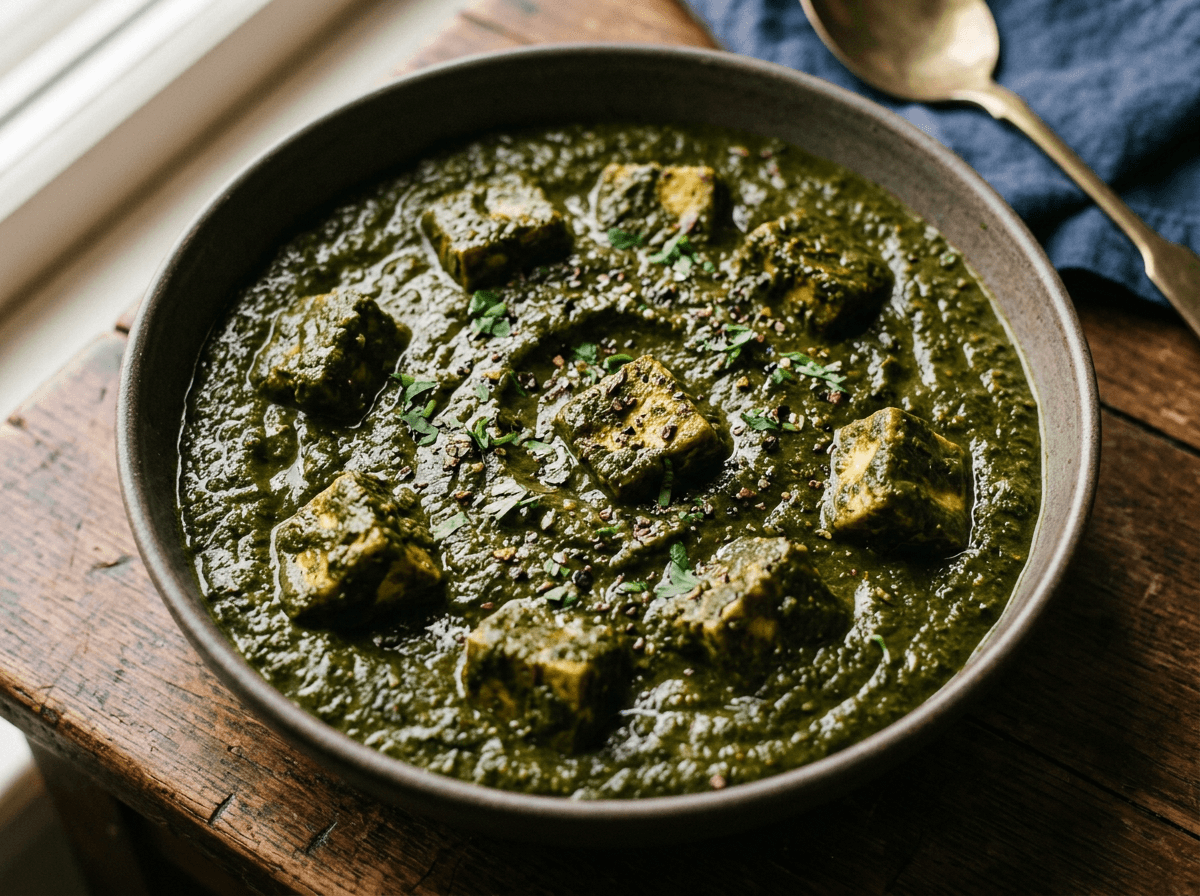
These two curries show how much mileage you get from contrast inside a single pan. One leans on earthy vegetables and spice; the other uses greens and paneer to create richness with structure.
The equipment question: you do not need a battery of pans, but the pot does matter
The good news is that one-pot dinners are not gear-driven. The bad news is that the wrong pan can sabotage them. If your saucepan is too shallow, liquid evaporates too fast and ingredients crowd instead of brown. If it is flimsy, hotspots catch the base before onions soften. If it is too small, you end up stirring nervously instead of letting the ingredients settle and colour.
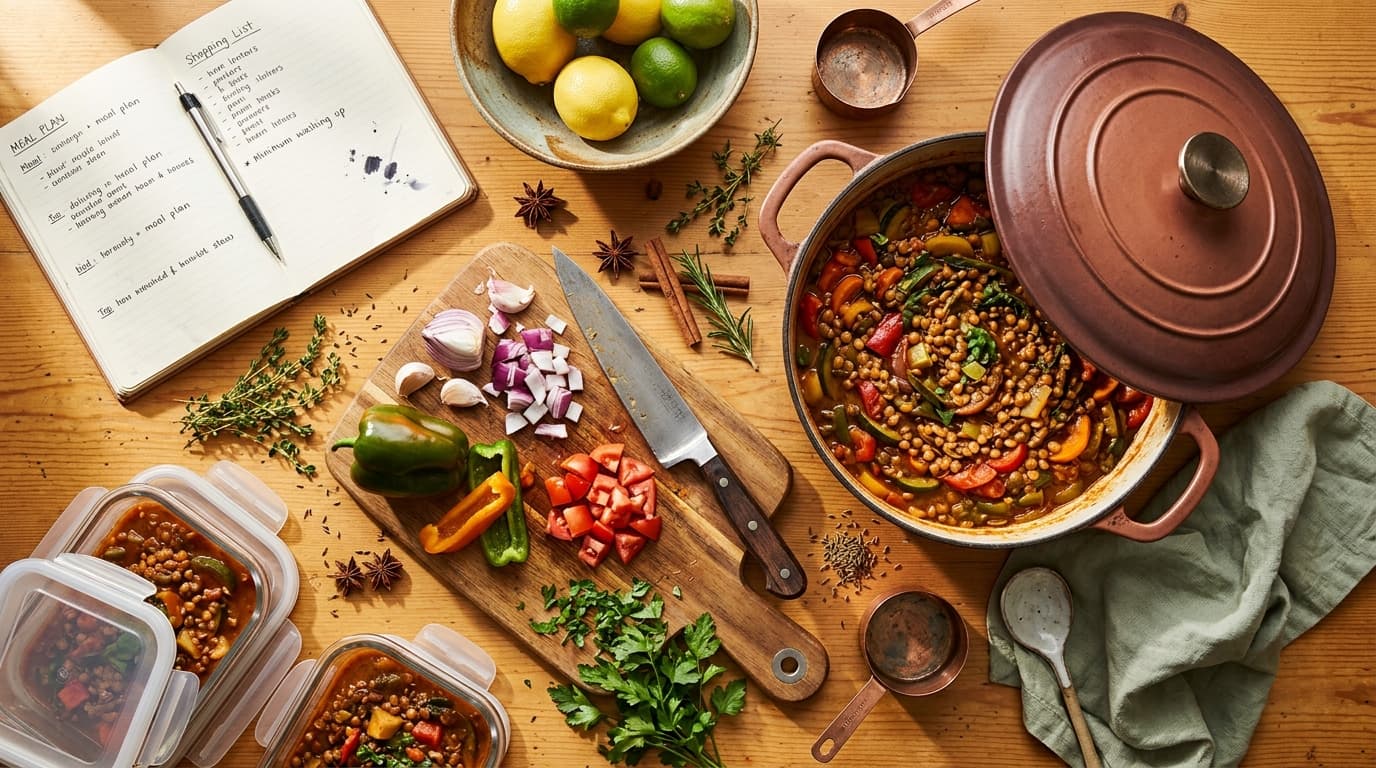
For most households, the sweet spot is a heavy-based casserole, sauté pan or Dutch oven in the 24 to 28cm range. That gives you enough surface area to brown properly and enough depth for rice, stock or sauce. Non-stick is fine for quick orzo or rice dishes, but stainless steel or enamelled cast iron is better if you want fond — those caramelised bits on the base that become the backbone of flavour after deglazing.
Lids matter more than people think. A good lid lets you choose whether the dish steams or reduces. For example, if you are making a lentil or rice-based one-pot dinner, covering the pot for the first stage helps the starch cook evenly. Taking the lid off near the end lets the sauce tighten. That simple switch is often the difference between glossy and gloopy.
You should also stop pretending every one-pot meal has to be served directly from the cooking vessel. Resting the pot off the heat for five to ten minutes is part of the process, and a ladle plus warm bowls often gives a better result than scraping at the pan on the hob. This is especially true for thicker dishes like dal, risotto-style pasta and creamy curries.
Reheating deserves a strategy too. Add a splash of water or stock before warming leftovers, especially with rice, lentils and pasta, because starch tightens in the fridge. Reheat gently, then refresh with something cold or sharp at the end. Leftover curry with fresh coriander tastes intentional. Leftover curry microwaved until solid at the edges tastes like surrender.
If you want the planning part handled with less friction, Eatpace’s auto-generated shopping list is genuinely useful here. One-pot cooking is at its best when ingredients overlap cleverly across the week — a bunch of coriander, a tub of yoghurt, a bag of rice — rather than leaving you with six half-used jars and no desire to cook again.
How to build a week of one-pot dinners without ending up in a beige comfort-food loop
The trap with one-pot dinners is repetition. Because they are easy, you can accidentally build a week that is all soft textures, brown sauces and similar seasoning. By Thursday, even a good stew feels oppressive. The way around this is not to abandon one-pot cooking; it is to vary the style of comfort.
A useful weekly rhythm is to alternate by texture and intensity. Start with something brothy or tomato-based on Monday, move to a creamy rice or curry on Tuesday, go lighter on Wednesday, then bring in a slower, deeper pot on Friday or the weekend. That gives you the convenience without the monotony. It also means your leftovers work harder because they are not competing with near-identical dinners from the night before.
Here is a practical pattern that works. One fast pasta-style pot early in the week. One vegetable-led curry in the middle. One richer rice dish when you need comfort. One long-simmered meal for a weekend night when the house can smell like dinner for two hours. That is enough variety to keep the format interesting.
This is where cuisines help. Indian and Thai recipes give you spice and creaminess without relying on cheese. Italian one-pot dishes lean on starch and savoury depth. French-style stews bring long-cooked richness. Rotate the cuisine and the whole category feels broader.
If you want to keep things flexible, browse one-pot recipes when you know you need low-effort dinners, then pull in one or two from comfort recipes when the weather or your mood calls for something more substantial. The point is not to be inspired every night. The point is to remove the nightly negotiation.
And that is the strongest argument for Eatpace in this category. One-pot dinners are brilliant because they reduce friction after cooking; the app tackles the friction before cooking by building a week around your actual preferences, then letting you swap a meal instantly if you cannot face another creamy dish. That is what useful dinner planning looks like: less admin, fewer pans, better odds of actually cooking.
Can one-pot dinners still be nutritionally balanced?
Do I need a Dutch oven to make good one-pot dinners?
Why do my one-pot rice dishes turn mushy when reheated?
Are one-pot dinners good for batch cooking, or do they get boring?
What is the best pan size for family one-pot dinners?
In this article
Plan your week in 30 seconds
Eatpace generates a personalised dinner plan for you. Free to try.
Download the app