Light Dinner Ideas for When You’ve Eaten a Big Lunch
How to reset dinner after a heavy midday meal without ending up with toast, a sad salad or another overly rich plate
If lunch was a burger and chips, a client meal, or one of those Sunday roasts that quietly wipes out the rest of the day, dinner needs a different job. It should steady you, not flatten you. The best light dinner ideas are not tiny portions or diet food; they are meals with enough protein, crunch, acid and warmth to feel like a proper supper.
That is exactly where a lot of people get it wrong. They either cook as if lunch never happened, or they overcorrect with something joyless and end up raiding the kitchen at 9.30. If you use a dinner planning app like Eatpace, this is the sort of evening where a lighter swap makes far more sense than forcing yourself through the original plan.
Stop thinking “less food” and start thinking “less heaviness”
A light dinner is not automatically a low-calorie dinner, and treating it that way usually produces miserable meals. What you actually want is lower drag: less cream, less deep starch-on-starch, less cheese piled on top of fat piled on top of carbs. You can still eat properly. You just need a plate that feels clean on the palate and easy in the stomach.
The easiest way to judge heaviness is to look at what lunch already covered. If lunch was rich and fatty, dinner should lean brighter and sharper. Think yoghurt, herbs, citrus, ginger, chilli, vinegar, cucumber, quick-cooked greens. If lunch was huge but beige, like pizza or a sandwich platter, dinner should bring water-rich vegetables and a cleaner protein rather than more bread and melted cheese.
This is why bowls and plated salads work so well in the evening, provided they are built properly. A bowl with warm rice, salmon, dressed greens and something punchy like miso or lime feels complete. A bowl of plain leaves with a few cherry tomatoes feels like a punishment. Your body notices the difference, and so will your mood.
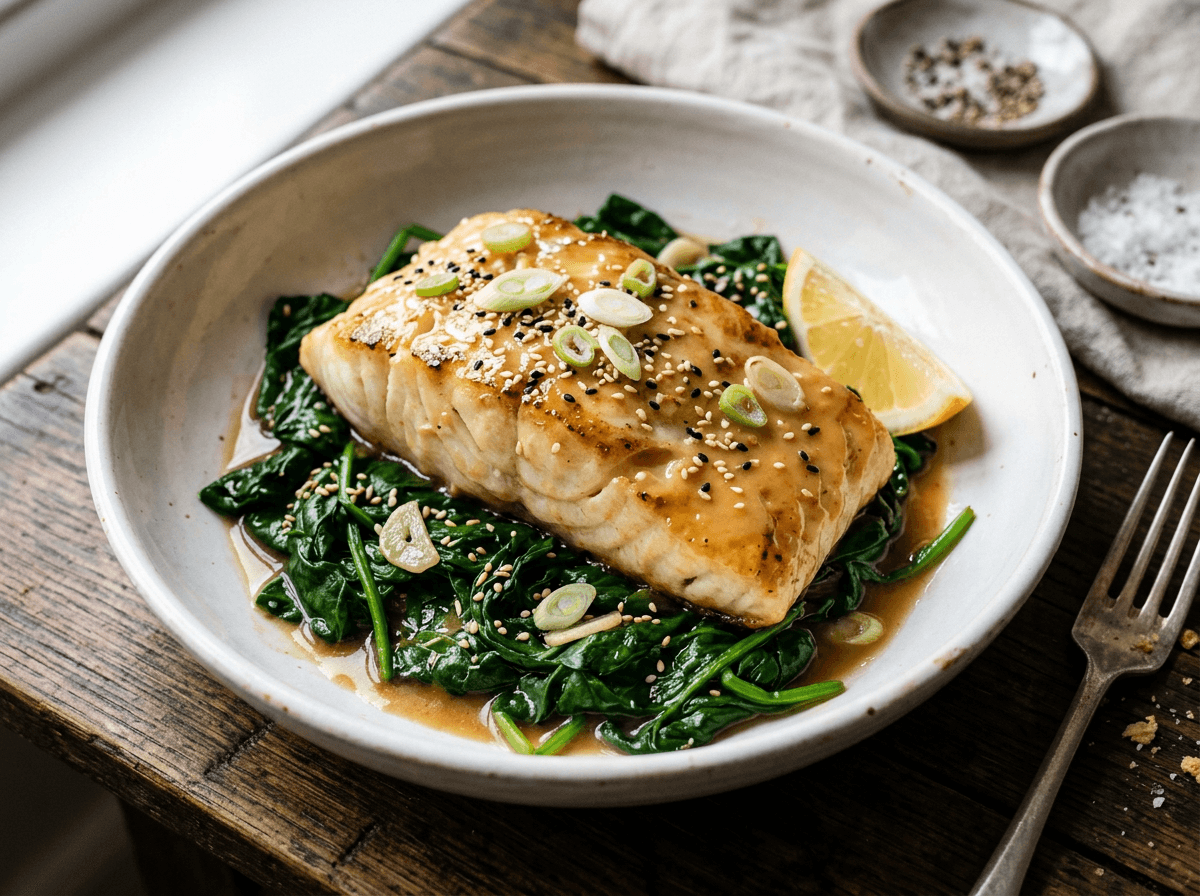
Take Miso Butter Cod & Greens, which is ready in 28 minutes. It works after a heavy lunch because cod is substantial without being stodgy, and the greens do the balancing work that chips, pastry and creamy sauces never do. Vietnamese Spring Roll Bowl, ready in 27 minutes, has the same appeal: fresh herbs, crisp vegetables and enough texture to wake your appetite up again without making you feel overfed.
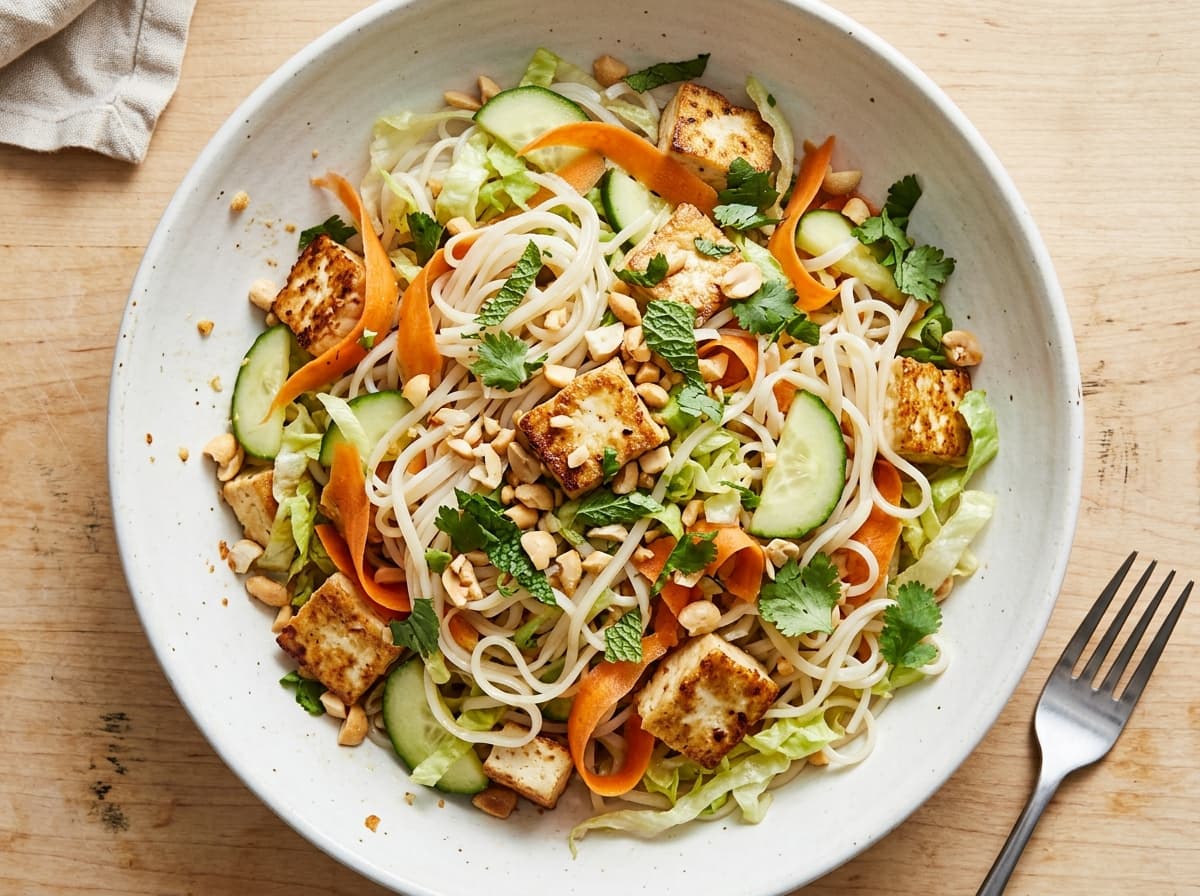
These are the kinds of meals worth keeping in your back pocket when you want dinner to feel restorative rather than austere. If you want more options in this vein, the light dinner recipes and healthy dinner recipes categories are a much better place to start than searching for “low calorie meals”, which tends to produce joyless nonsense.
Build dinner around contrast, not restriction
The smartest light dinners are designed around contrast. If lunch was soft, rich and salty, dinner should be crisp, acidic and herb-heavy. If lunch was restaurant food with lots of butter and oil, dinner should include ingredients that taste naturally vivid on their own, so you do not need to drown everything in sauce to make it appealing.
This is where people underestimate texture. Crunch is not cosmetic; it is what makes a lighter meal feel finished. Radishes, cucumber, shredded cabbage, toasted seeds, quick-pickled onions and charred vegetables all do more work than an extra spoonful of rice ever will. They make dinner feel deliberate rather than meagre.
A very reliable move is to choose one warm element and keep the rest cool and sharp. That could be hot salmon over cold cucumber and rice, charred halloumi over lemony vegetables, or warm tofu with a peanutty dressing and lots of raw crunch. You get comfort from the cooked element, but the overall effect stays fresh.
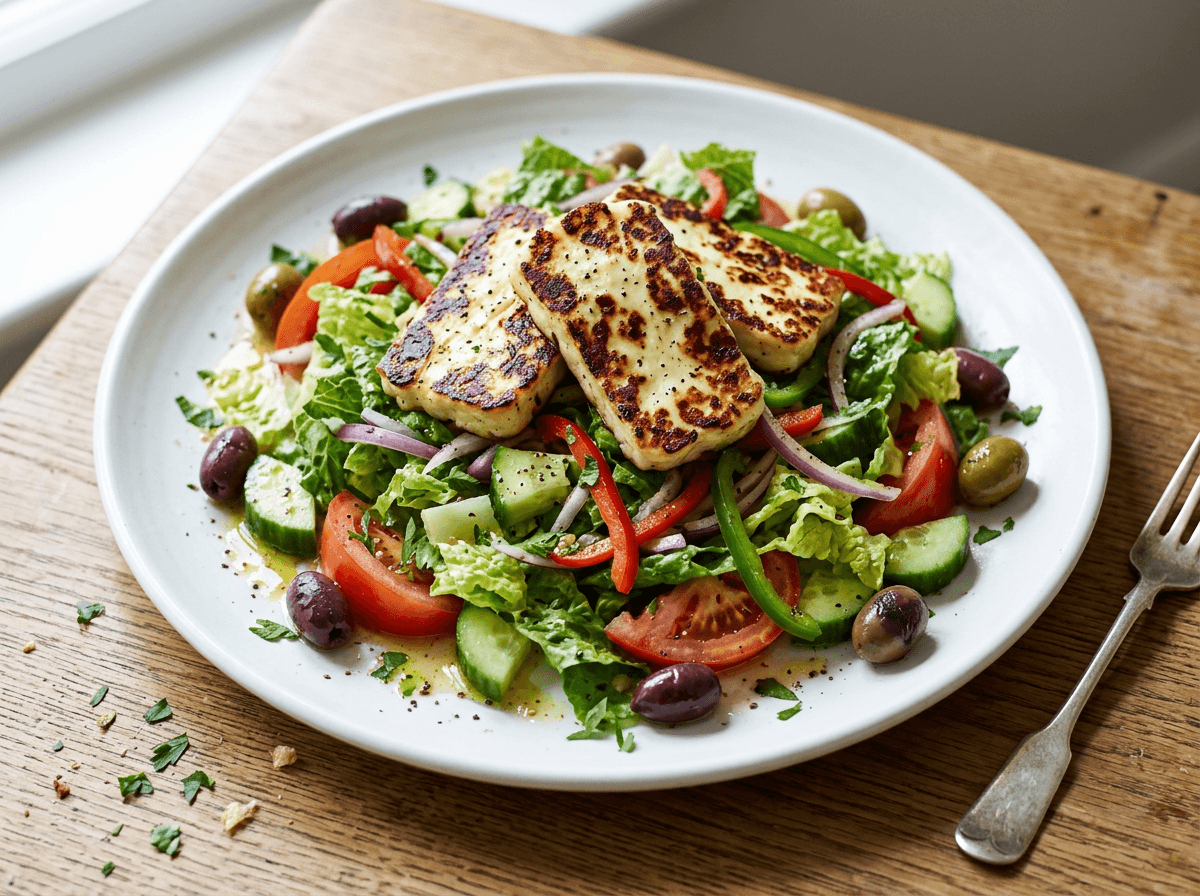
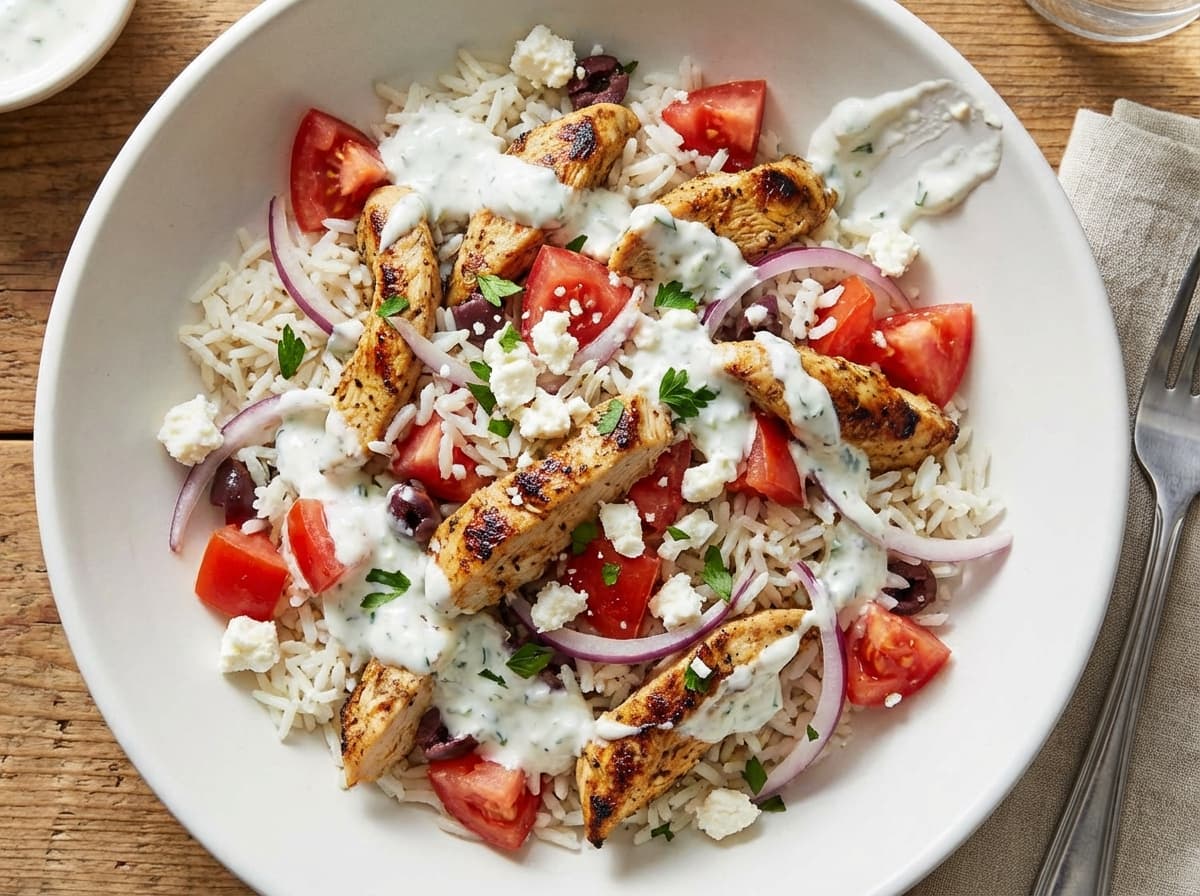
Charred Halloumi & Vegetable Salad is ready in 25 minutes and gets this balance right. Halloumi gives you salt and satisfaction, but the vegetables stop it tipping into heaviness. Chicken Gyros Bowl, ready in 40 minutes, is another good example: the structure is hearty enough to count as dinner, but it eats lighter than a wrap, flatbread or plate of chips because the freshness is built in rather than tacked on.
There is also a practical point here: light dinners should not require heroic effort. If you are already feeling overfull and sluggish, you are not going to braise lamb for 80 minutes or make three side dishes. You need meals that can be assembled with a bit of knife work, one pan, and a dressing you can shake in a jar. Browse easy dinner recipes when you want that sweet spot between proper cooking and minimal resistance.
Choose proteins that satisfy quickly and sauces that wake everything up
When lunch has been oversized, dinner falls apart for one of two reasons. Either it is too insubstantial and you start prowling for biscuits an hour later, or it is too rich and you go to bed feeling as if you swallowed a brick. The fix is protein that satisfies quickly, paired with sauces and dressings that add brightness rather than weight.
Fish is particularly good here because it delivers fullness without the same dense feeling as red meat or creamy pasta. Miso Butter Salmon Bowl, ready in 28 minutes, is ideal on a day when lunch was pub food or a long business meal. The salmon is rich enough to feel like a treat, but because the bowl format includes rice and vegetables in sensible proportion, it lands far more gently than another comfort dish.
Prawns and tofu are useful for the same reason. They take on flavour fast, cook quickly, and sit well with punchy ingredients like lime, chilli, garlic and herbs. That means you can build a dinner with real personality in half an hour, which matters because bland “healthy” food is exactly what sends people back towards crisps and toast.
This is where dressing matters more than people think. A spoonful of yoghurt with lemon and garlic, a sharp sesame-lime dressing, or a quick vinegar-heavy herb sauce can make a very simple bowl taste complete. The mistake is relying on heavy bottled sauces that turn a clean dinner into another sugar-salt-fat bomb.
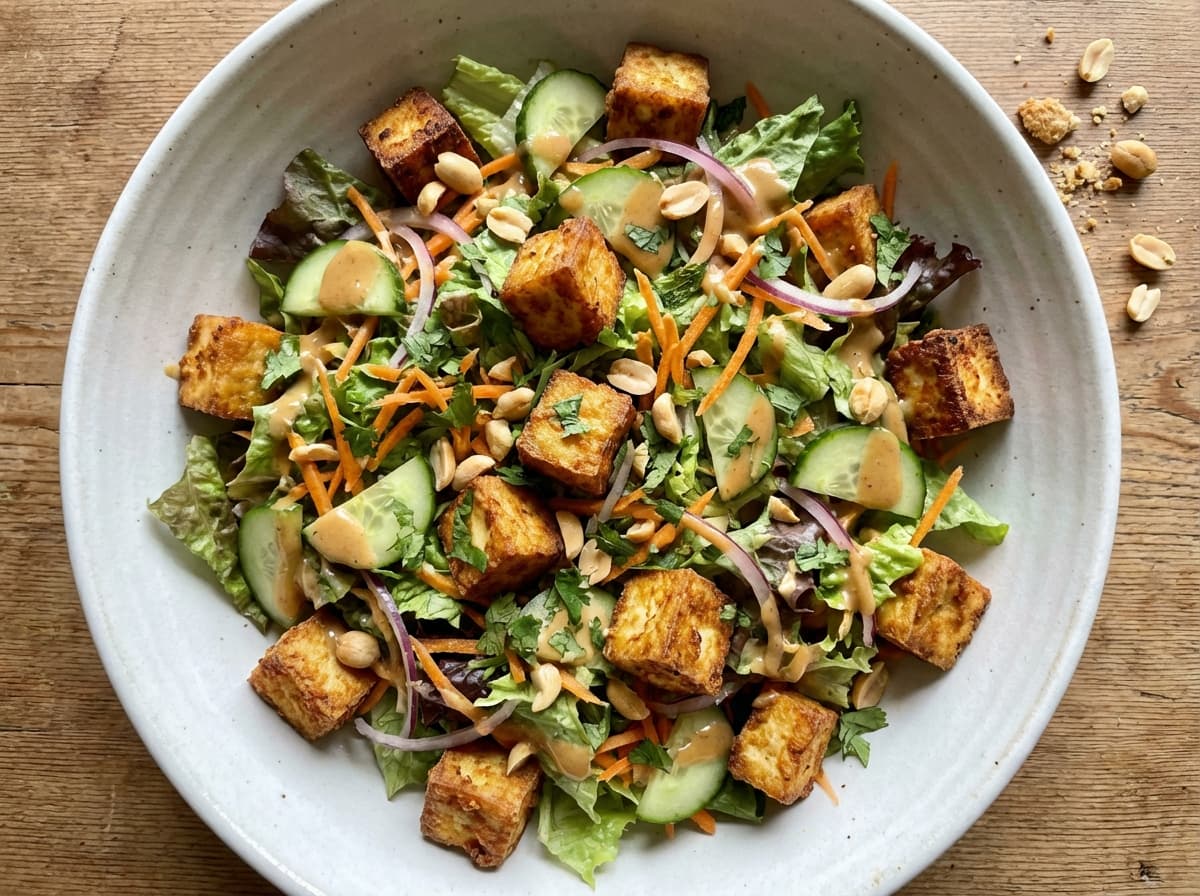
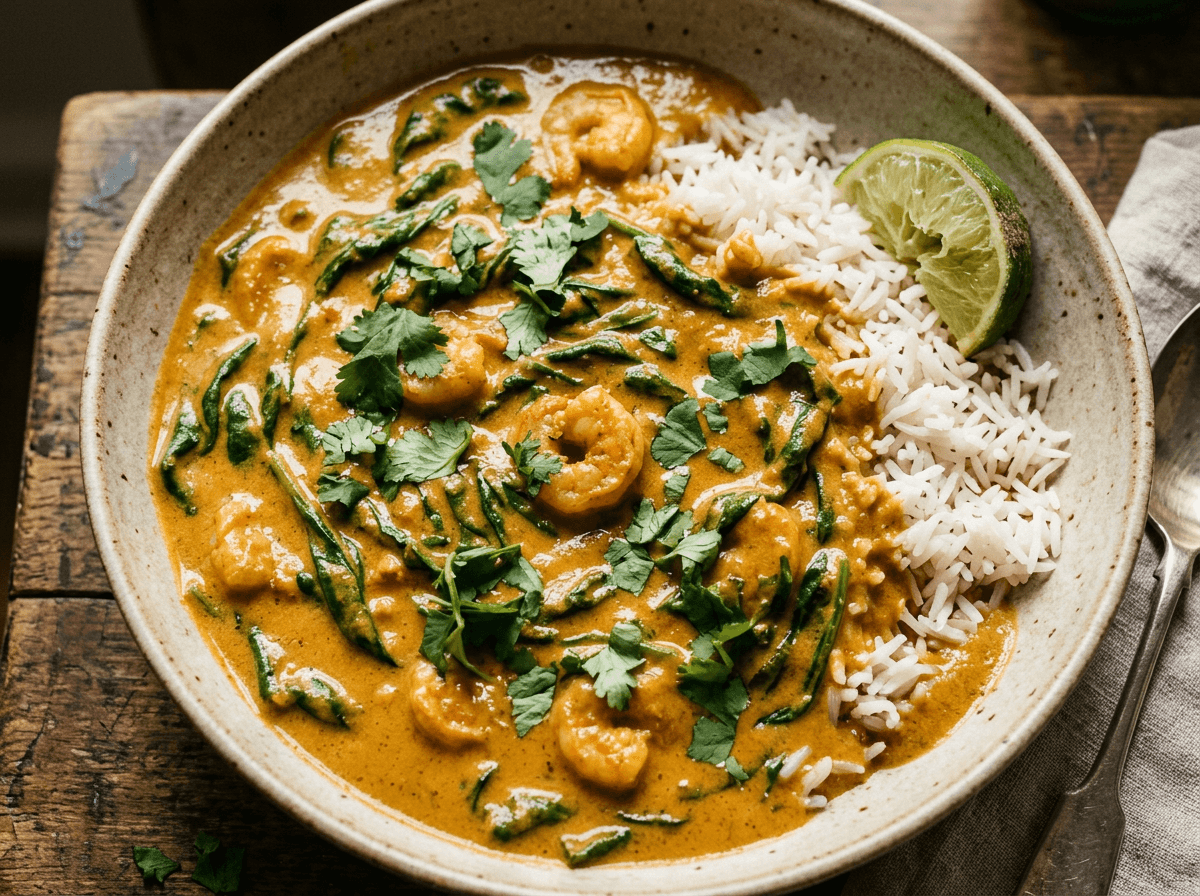
Crispy Tofu & Peanut Salad is ready in 40 minutes and proves that salad can absolutely count as dinner if it has enough texture and protein. The peanut element gives satisfaction, but the overall plate still reads fresh. Prawn Coconut Curry & Rice, ready in 40 minutes, is a good choice when you want something warming but not cumbersome; compared with a cream-laden pasta bake, it feels far livelier and better suited to an evening reset.
If your week tends to swing between heavy lunches and rushed evenings, this is exactly the kind of problem a personalised planner can solve. Eatpace lets you build a week around your actual appetite and then swap a richer meal for something lighter or faster when the day goes off script, which is far more realistic than pretending every Tuesday has the same energy.
Timing matters more than people admit on big-lunch days
If you ate a late, oversized lunch, the old 7 pm dinner rule is often the real problem. You are not hungry yet, but you cook anyway because that is what time says dinner should happen. Then you sit down to a meal you did not want, eat too much out of habit, and end the day feeling worse than necessary.
On heavy-lunch days, it is usually smarter to delay dinner slightly and shrink the emotional drama around it. You do not need a feast at the usual hour. You need a meal that matches your actual appetite at 8 pm, 8.30 pm or even later, provided it is something digestible and not a second round of indulgence.
There is also a difference between being hungry and wanting a palate reset. Sometimes what you need at 6.30 is not dinner but a glass of water, a walk round the block, and another hour before you decide. That pause often reveals whether you want a proper plate of food or something simpler, like a bowl built from leftovers with herbs and dressing.
A useful rule is this: if lunch was your biggest meal, dinner should be either broth-and-bowl light or protein-and-veg light. Not snacky. Not random. A proper meal, just scaled to the day. That might mean a small grain bowl with cod and greens, or a plate of halloumi and vegetables with a bit of bread rather than a mountain of pasta.
This is also where planning beats improvising. If your fridge only contains ingredients for heavy meals, you will cook heavy meals. Having a few lighter options already slotted into the week makes it much easier to respond sensibly. Eatpace is especially useful here because the shopping list is generated from your chosen dinners, which means you are more likely to have the cod, greens, herbs or yoghurt you actually need on these evenings instead of defaulting to freezer beige.
For more ideas that suit this kind of flexible evening, the healthy dinner recipes section is full of meals that feel balanced rather than punitive.
The best light dinners still feel like dinner
The final test is simple: would you be happy to serve it to someone else? If the answer is no, it is probably not a good light dinner. A bowl of cottage cheese and cucumber may be technically light, but it does not feel like supper. You want meals with shape, temperature contrast, proper seasoning and at least one element that feels generous.
That generous element does not need to be cream, pastry or a vat of cheese. It can be crisp-skinned fish, warm rice, charred vegetables, a good dressing, fresh herbs, or a spoonful of something cooling and tangy. These are the details that stop a lighter meal from feeling second-rate.
One of the best ways to think about it is restaurant logic. The dishes that feel light but satisfying in good restaurants are rarely the ones with the fewest ingredients. They are the ones with the clearest structure. Protein with a bright sauce. Vegetables cooked properly, not as an afterthought. A starch in a controlled supporting role instead of a giant mound.
That is why bowls, composed salads and clean curries work so well after a big lunch. They are balanced by design. Miso Butter Cod & Greens in 28 minutes, Charred Halloumi & Vegetable Salad in 25 minutes, and Chicken Gyros Bowl in 40 minutes all understand this better than the usual “light dinner” clichés do. They give you flavour first, then lightness as a consequence.
If your evenings are often dictated by what happened at lunch, it is worth building a few of these into regular rotation rather than deciding from scratch every time. A good automatic weekly dinner plan is less about inspiration than relief. When Eatpace lets you tap “Create my week” and then swap to a lighter dinner in seconds, it removes the exact kind of low-level decision fatigue that tends to end in takeaway or toast.
What time should I eat dinner if I had a huge lunch?
Does a light dinner have to be low-calorie?
Is it bad to eat dinner late after a big lunch?
What should I avoid for dinner after a heavy lunch?
Can I skip dinner altogether if I’m still full from lunch?
In this article
Plan your week in 30 seconds
Eatpace generates a personalised dinner plan for you. Free to try.
Download the app