Vegetarian Meal Planning: A Week of Easy Dinners That Won’t Bore You
A practical vegetarian dinner plan with real variety, smarter protein pairing and easy weeknight sequencing across Indian, Italian and Asian cooking.
If your idea of vegetarian meal planning is a joyless parade of lentil soup, pasta with tomato sauce and a tray of roasted vegetables, the problem is not vegetarian cooking. The problem is bad sequencing. A satisfying week of easy dinners needs contrast in texture, effort and richness, otherwise everything starts tasting oddly beige by Wednesday.
The fix is to stop planning by ingredient and start planning by dinner mood. You want one brothy or fresh night, one creamy or cheesy night, one spice-led night, one noodle or rice bowl night, and one dinner that produces tomorrow’s lunch almost by accident. That gives you range without buying 40 random ingredients. If you use a tool like Eatpace, that’s exactly the sort of relief it’s built for: less staring into the fridge, more dinners that actually fit your week.
Build your vegetarian meal plan around contrast, not categories
Most people organise a vegetarian week around food groups: a bean night, a tofu night, a pasta night. That sounds sensible, but it often creates a run of dinners with the same soft texture and the same comforting-but-heavy profile. What you actually notice at 7pm is not whether you’ve eaten pulses twice. You notice whether tonight feels different from yesterday.
A better system is to rotate by eating experience. Put a crisp, sharp dinner after a creamy one. Follow a slow-feeling curry with something fast and slippery from a wok. If Monday is rich, Tuesday should be bright. If Wednesday takes 40 minutes, Thursday should take 28.
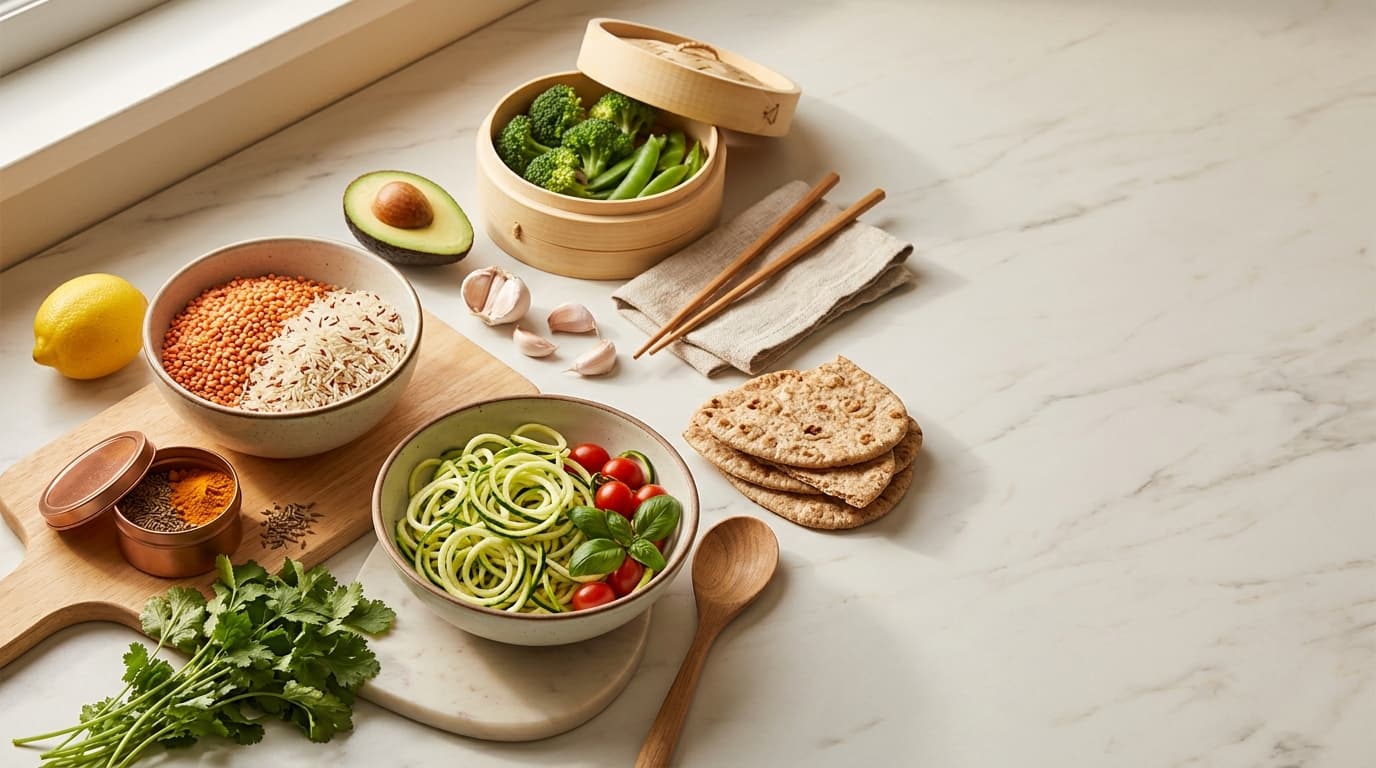
This is where cuisine does useful work. Indian vegetarian cooking is brilliant for deep spice and proper comfort. Italian brings creaminess, starch and indulgence. Asian noodle and rice dishes give you speed, crunch and punch. Instead of asking, “How do I fit enough vegetables in?”, ask, “What dinner shape is missing from this week?” That question leads to better meals.
For example, Saag Paneer Curry is ready in 40 minutes and gives you richness, spice and enough heft to feel like dinner rather than a side dish pretending to be one. Vegetable Pad Thai is ready in 28 minutes and solves a completely different problem: you want something fast, savoury and satisfying, but not another bowl of stew-like softness.
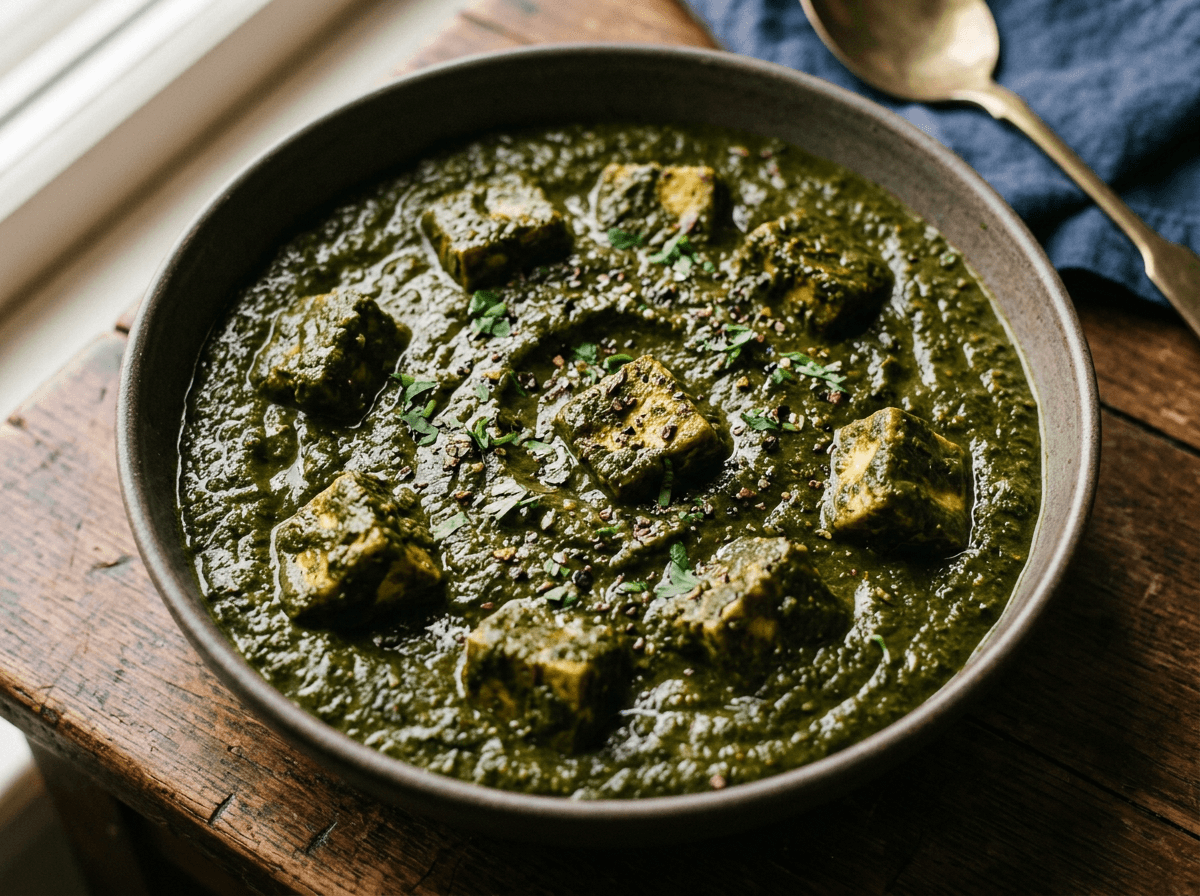
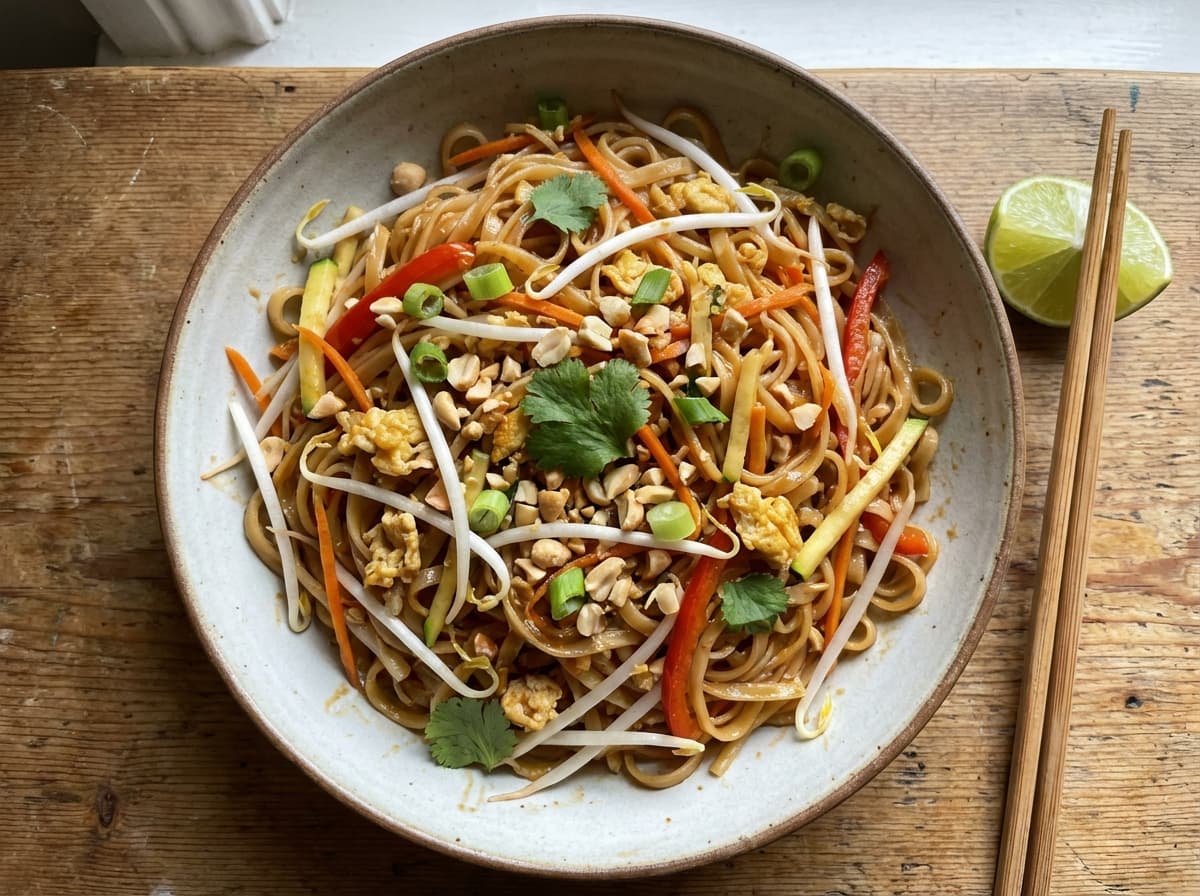
These two work well in the same week because they scratch different itches. One is cosy and spoonable; the other is quick, chewy and full of contrast. That is the whole game.
There is also no rule saying every vegetarian dinner must perform nutritional heroics on its own. If one night is more carb-led, make the next one greener and sharper. If one meal leans on cheese, balance it later with beans, greens or tofu. Browse vegetarian recipes with that lens and you will make far better choices than if you chase abstract balance at every single meal.
The other overlooked trick is to plan one “high-friction” dinner and several “low-friction” ones. High-friction means a meal that needs more chopping, stirring or attention. Low-friction means something you can cook almost on autopilot after a long day. A week full of worthy but fiddly vegetarian recipes is exactly how people end up ordering takeaway on Thursday.
Make protein feel natural instead of bolted on
The most common mistake in easy vegetarian dinners is adding protein as an afterthought. You make a tomatoey pasta, then panic and throw in a tin of chickpeas. Technically, yes, there is more protein. In practice, you have made a strange compromise meal. Good vegetarian planning builds protein into the identity of the dish.
Paneer, tofu, lentils and beans all behave differently, so use them for what they are actually good at. Paneer holds shape and carries spice. Tofu rewards crisp edges and bold sauces. Lentils disappear into comfort food and make it feel substantial. Beans bring softness and body, especially in saucy dishes and stews. If you assign each one the right role, your dinners stop feeling like meat meals with the centre removed.
Take Palak Dal Curry, ready in 42 minutes. It works because lentils are not decoration; they are the structure. The spinach folds into the dal rather than sitting awkwardly beside it, and the whole thing eats like a complete dinner. Or look at Gochujang Tofu Bibimbap Bowl, ready in 37 minutes. Tofu makes sense there because the bowl wants crisp, sauced pieces against rice and vegetables. The protein belongs.
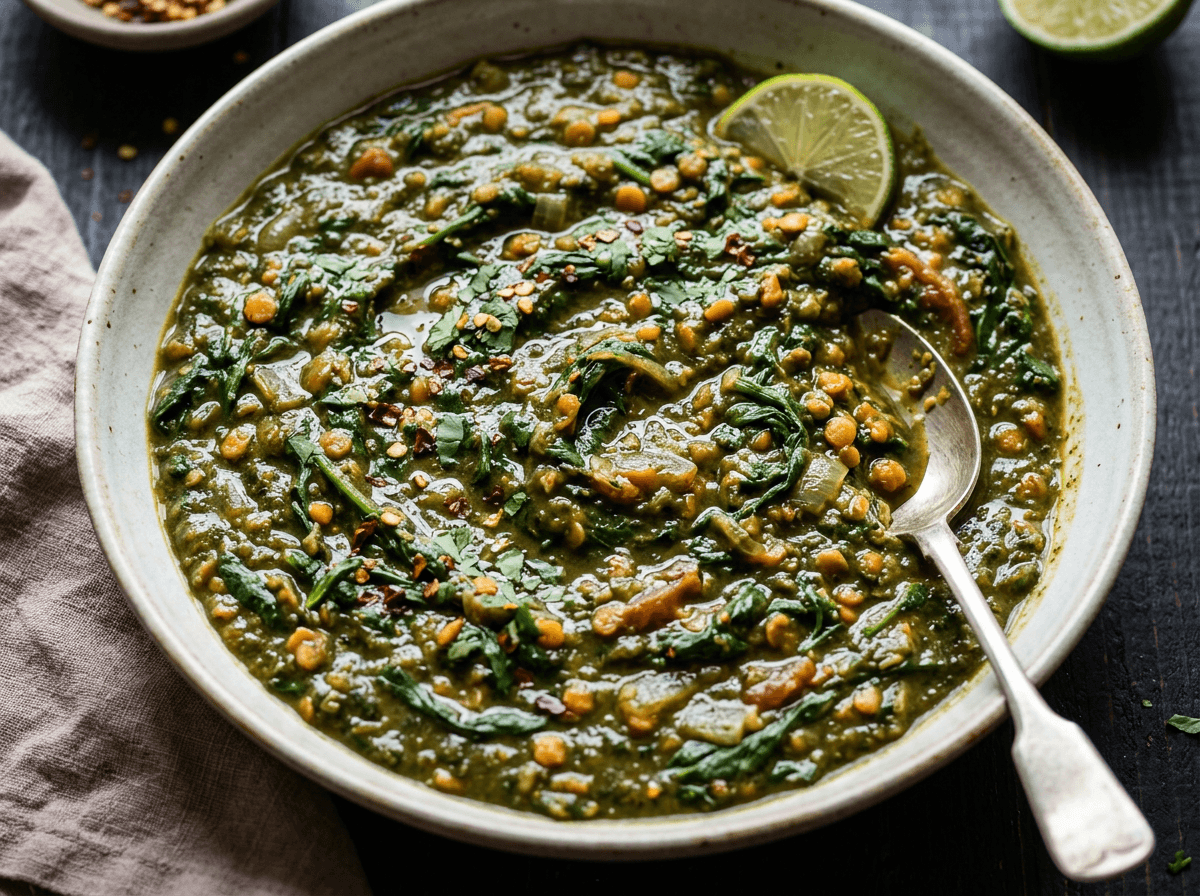
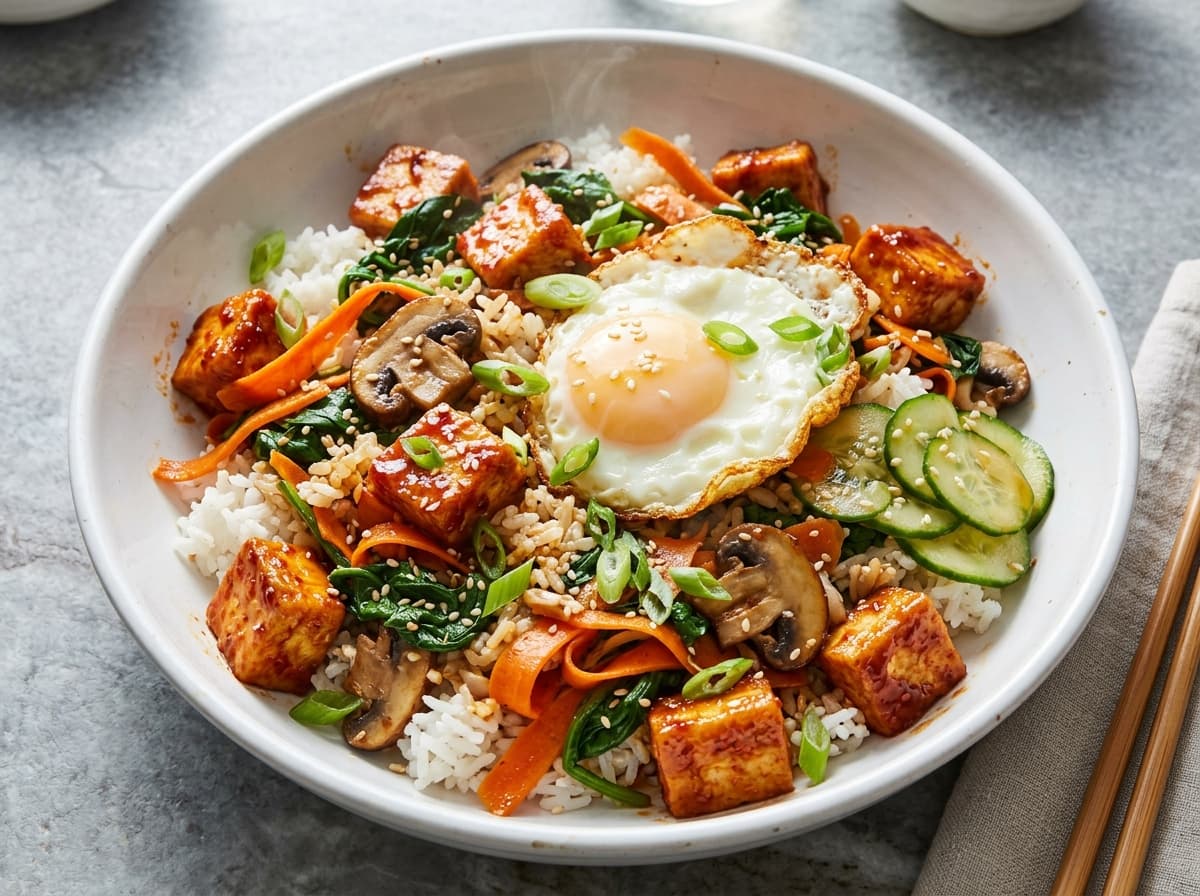
These are the kinds of meals that answer the protein question without announcing that they are answering it. That matters more than most nutrition advice admits. People stick to vegetarian meal planning when dinner still feels like dinner.
There is also a useful pairing rule: combine one concentrated protein with one background protein. Paneer plus peas. Tofu plus peanuts. Lentils plus yoghurt. Beans plus a little cheese. You do not need to turn every meal into a spreadsheet, but you do need to stop assuming a few mushrooms will somehow do all the heavy lifting.
If you want lighter meals in the same week, use protein to create satisfaction rather than bulk. Crispy Tofu & Peanut Salad is ready in 40 minutes and proves that a salad can be dinner if it has crunch, fat, heat and enough chew. That same principle is why many genuinely good healthy dinner recipes feel complete while sad desk-lunch salads do not.
A final point: don’t spread your protein sources too thinly across the week. Pick two or three anchors and repeat them intelligently. One block of paneer, one pack of tofu, one bag of red lentils and one tin or two of beans can cover most weeknight needs. That is cheaper, easier to shop for and much more likely to get cooked.
Sequence the week so Wednesday doesn’t collapse
A realistic vegetarian week is not seven equally ambitious dinners. It is a sequence that respects your energy. Monday often has decent momentum. Tuesday is busier than expected. Wednesday is where good intentions go to die. Friday wants comfort, not virtue. Plan for that pattern and your week becomes much easier.
Start with one dinner that creates useful leftovers without feeling like meal prep homework. Dal Tadka, ready in 42 minutes, is ideal because it reheats beautifully and often tastes even better the next day. You can eat it with rice one night, then use the leftovers in a bowl with flatbreads, yoghurt and quick-pickled onions later in the week. That is not “batch cooking” in the dreary sense; it is strategic laziness.
Midweek, you need something with speed and payoff. Crispy Tofu Pad See Ew is ready in 30 minutes and has exactly the right Wednesday energy: fast, salty, comforting and not remotely austere. Then save a more indulgent dinner for the point where you want a reward. Truffle Mushroom Orzo Risotto is ready in 42 minutes and feels far more luxurious than the effort suggests.
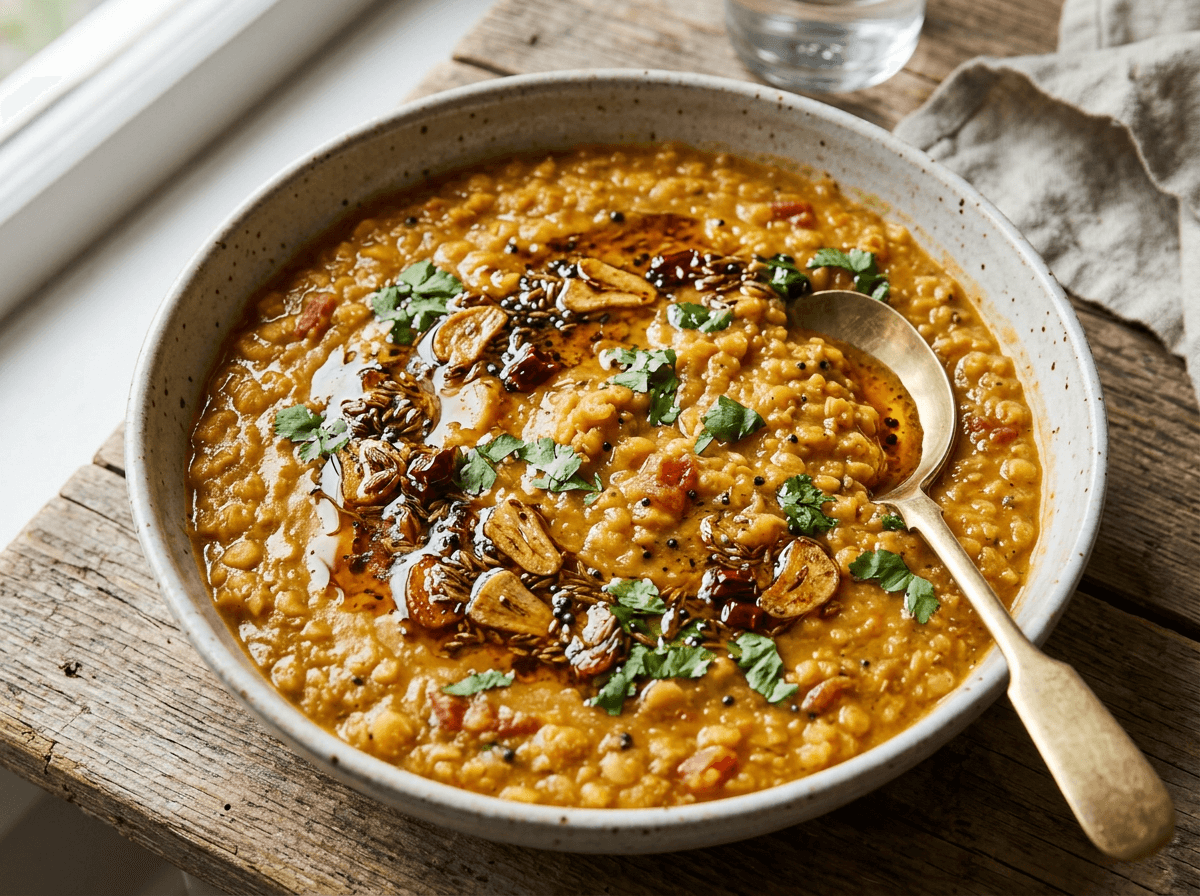
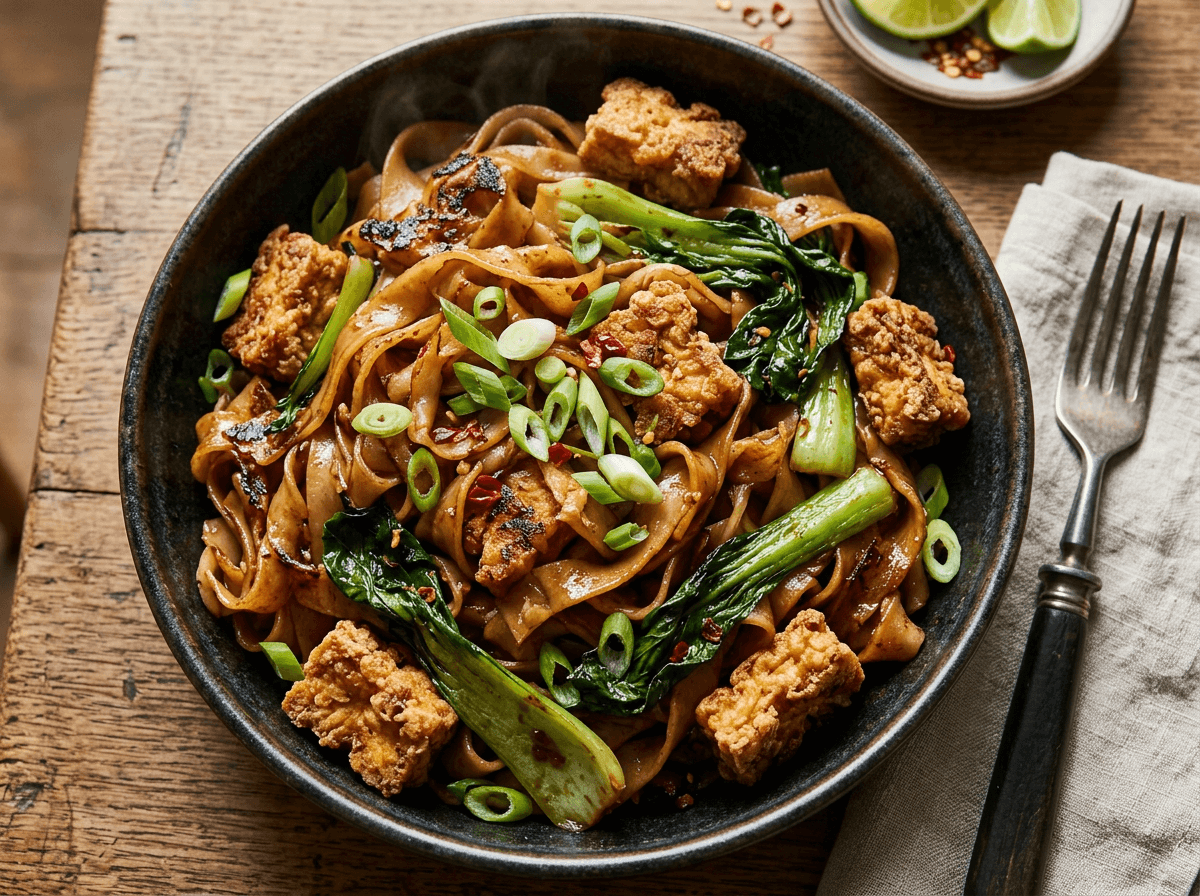
This combination works because it gives you a smart leftover night and a rapid rescue night. Add something more indulgent later and the week stops feeling repetitive.
Notice what this plan avoids: two curries back to back, two noodle dishes back to back, or three soft, tomato-based meals in a row. That is the hidden reason many meal plans fail. They are nutritionally fine and psychologically exhausting.
If you prefer to keep things even simpler, build around formats rather than recipes: one curry, one noodle dish, one salad-style dinner, one cheesy pasta, one bean-based pot. Eatpace does this sort of matching surprisingly well when you tap “Create my week”, especially if you want dinners aligned to your time and skill level rather than your aspirational self.
Shop once, cook smarter and stop wasting the awkward half-bunch
Vegetarian meal planning falls apart in the fridge, not on paper. The usual culprit is ingredient sprawl: half a bunch of coriander, three spring onions, a lonely aubergine, two tablespoons of yoghurt, a quarter pack of tofu. You did not fail because you lacked discipline. You failed because the plan was too precious.
The smarter approach is to choose overlap with intent. Spinach is a very useful example. It can go into Saag Paneer Curry, Palak Dal Curry, a rice bowl, an orzo dish or an omelette lunch. Spring onions can finish a bibimbap bowl, a Pad See Ew, a salad or a quick yoghurt sauce. A tub of Greek yoghurt can become a topping for curry, a dressing for bowls and tomorrow’s breakfast. This is how a week starts feeling organised without becoming rigid.
Beans and lentils are your insurance policy. If one dinner gets bumped because you worked late, a can of butter beans can slide into a tomato base and rescue the evening in 15 minutes. If herbs wilt, blitz them with oil, lemon and nuts or seeds and use them as a finishing sauce. If you buy paneer for one meal, cube and marinate the rest straight away so it is easier to use later. Reduce friction early and you will actually cook the food.
For families or mixed households, keep the base vegetarian and the extras optional. A noodle bowl can have chilli crisp on the table for one person and extra peanuts for another. A curry can be served with rice for adults and flatbreads for children. The point is not to make seven bespoke dinners. The point is to build one dinner with small exits and upgrades.
There is also a strong case for choosing recipes that share pantry logic, not just fresh ingredients. Soy sauce, rice vinegar, sesame oil and gochujang can cover several Asian-style dinners. Tinned tomatoes, garlic, olive oil and Parmesan carry a good chunk of Italian vegetarian cooking. Cumin, turmeric, ginger and garam masala unlock multiple Indian dinners. Shop by flavour system and you spend less while eating more widely.
If you want an easier starting point, browse healthy recipes for lighter anchors and vegetarian recipes for the fuller week. The useful question is not “What do I fancy?” but “What can I cook three different ways before it goes off?” That one shift cuts waste immediately.
Near the end of the week, this is where Eatpace earns its keep: if Thursday suddenly needs to be faster or lighter, you can swap a meal instantly instead of rebuilding the whole plan. That flexibility matters more than perfect planning ever will.
How do I get enough protein on a vegetarian diet without eating tofu every night?
Can vegetarian meal prep actually work for dinners, not just lunches?
What if my family says vegetarian dinners aren’t filling enough?
How do I meal plan vegetarian dinners if everyone likes different cuisines?
Is it cheaper to meal plan vegetarian dinners for a whole week?
In this article
Plan your week in 30 seconds
Eatpace generates a personalised dinner plan for you. Free to try.
Download the app